OFFICE RENOVATION IN OCT LOFT
华侨城工作室改造
华侨城工作室改造
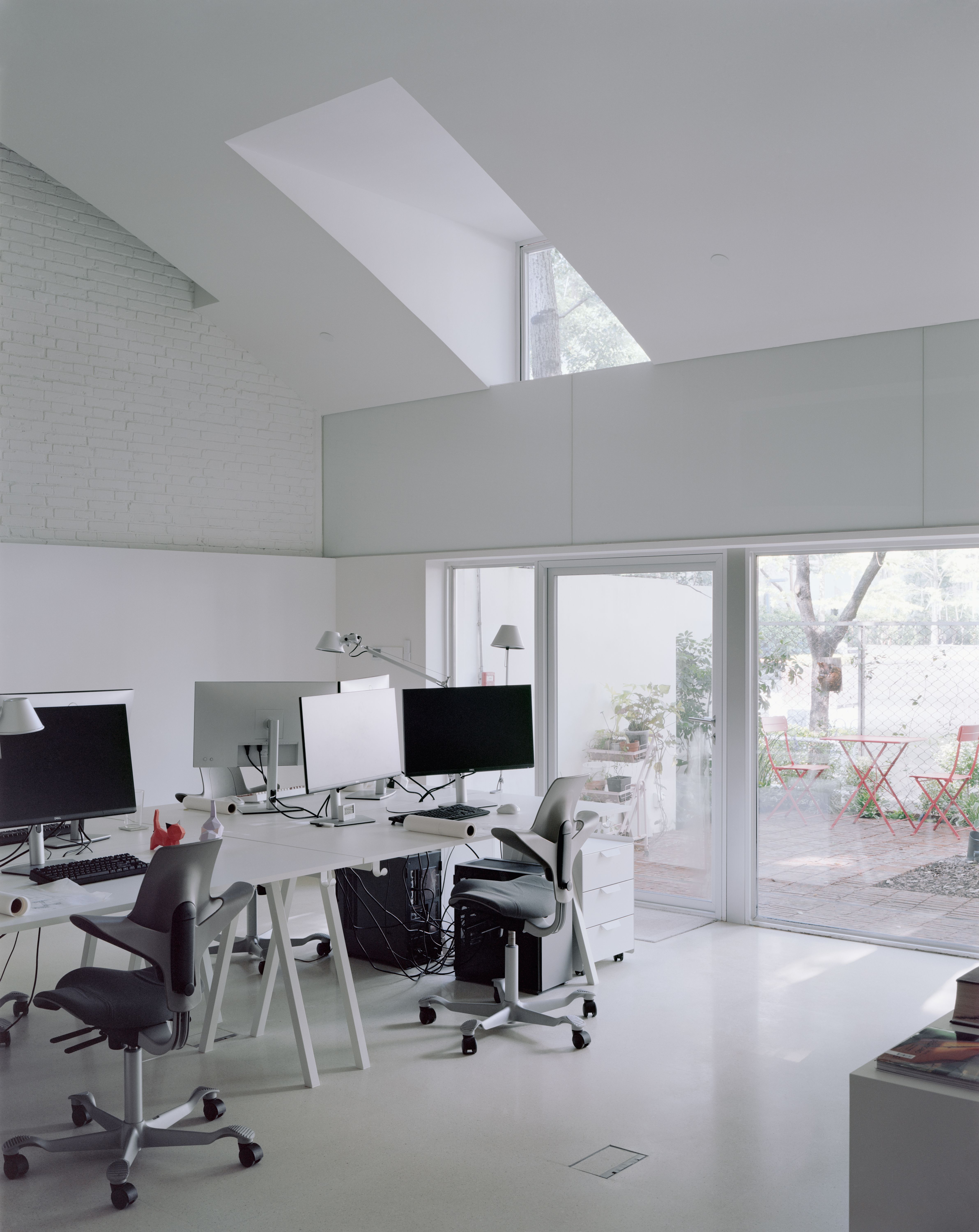
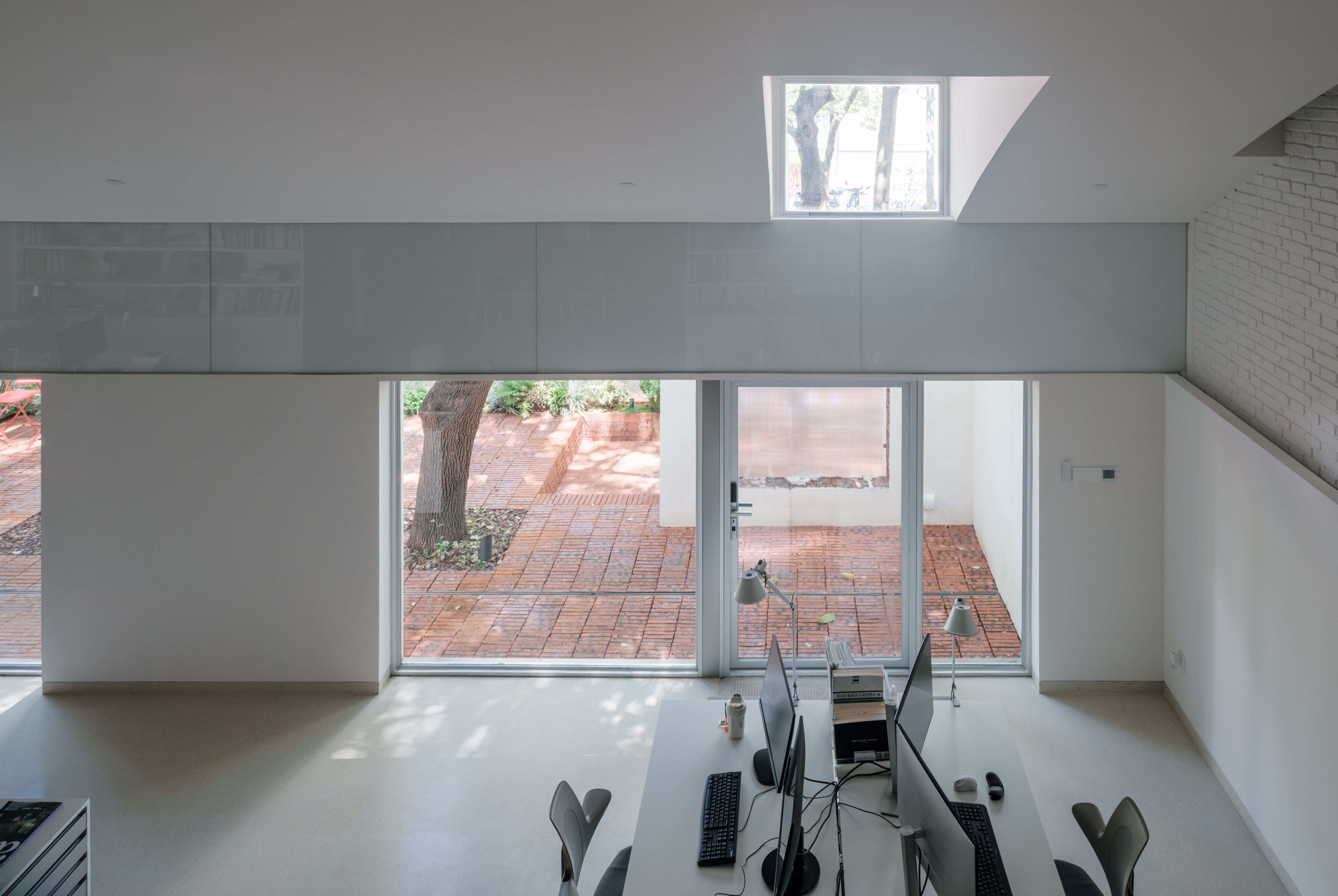
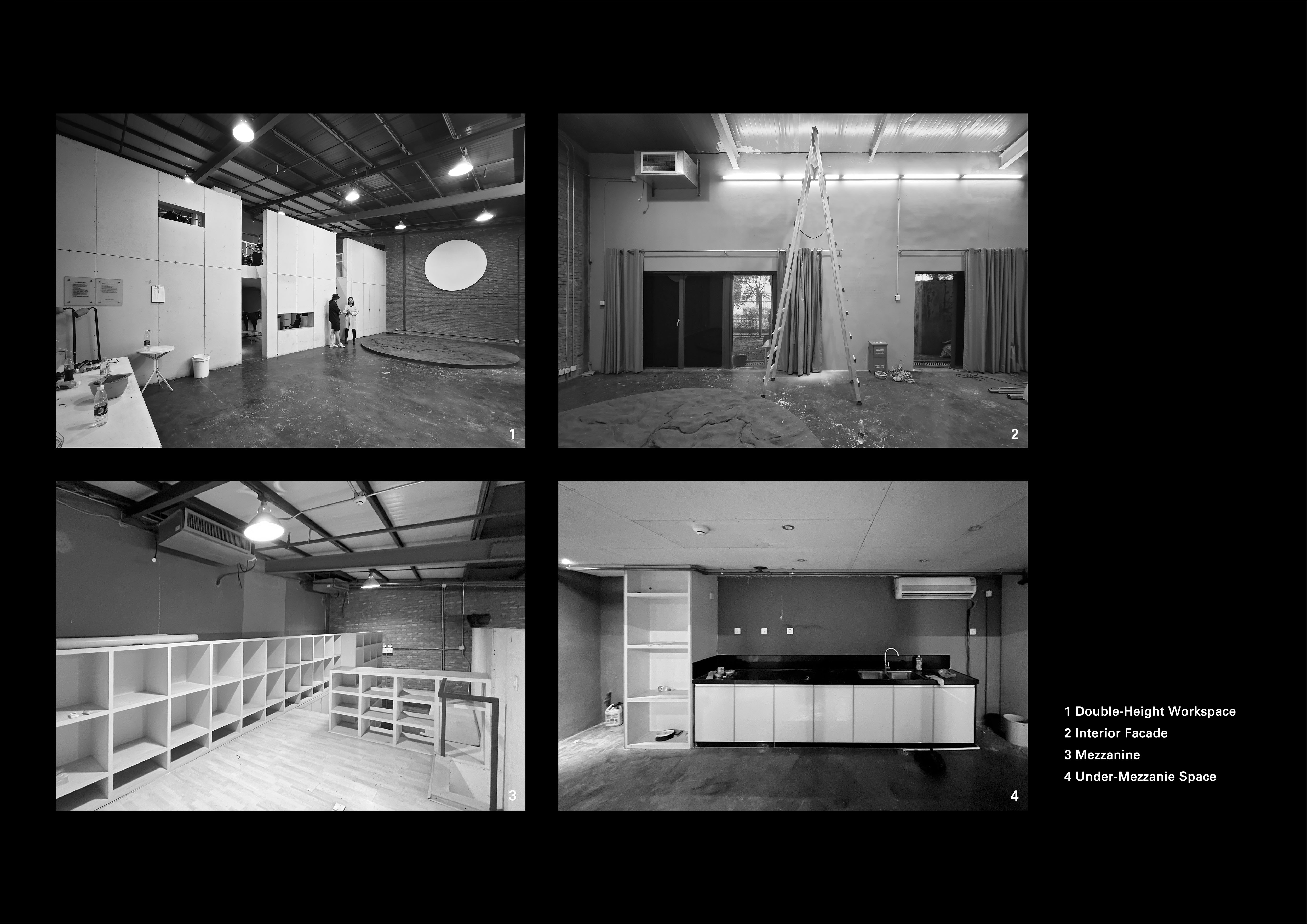
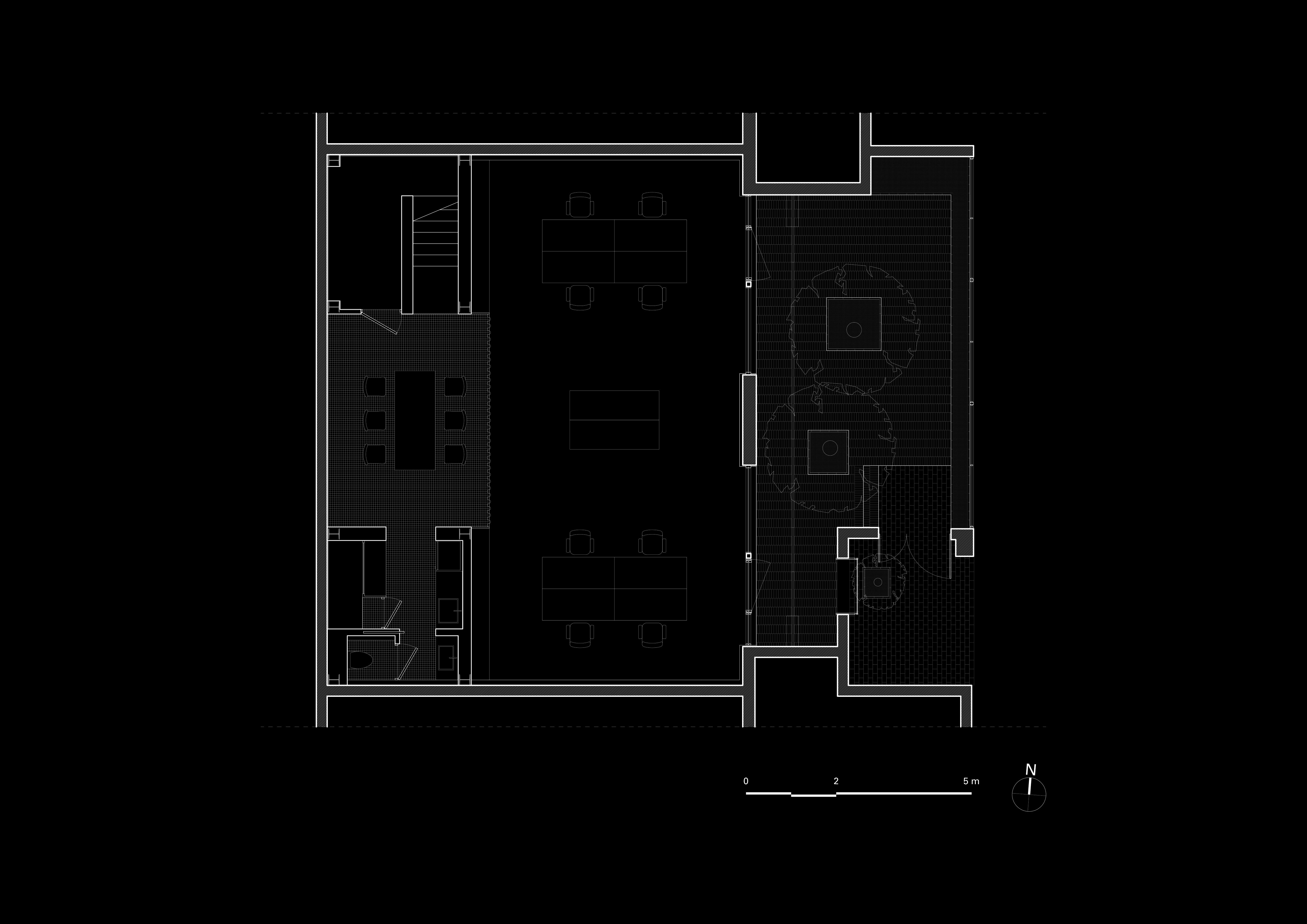
The design of the office is derived from a derelict artist studio shed.At the first encounter, the space appeared hermetic and dim: an east-facing double-heightspace with a mezzanine level that admitted only the muted light of low tinteddoors and windows. Introducing light through new apertures was both animperative and instinctive act. Fortunately, the two existing ventilationshafts on the façade provided the structural basis for expanding them into apair of high windows that receive and diffuse natural light, thereby unfoldingthe spatial narrative of the design.
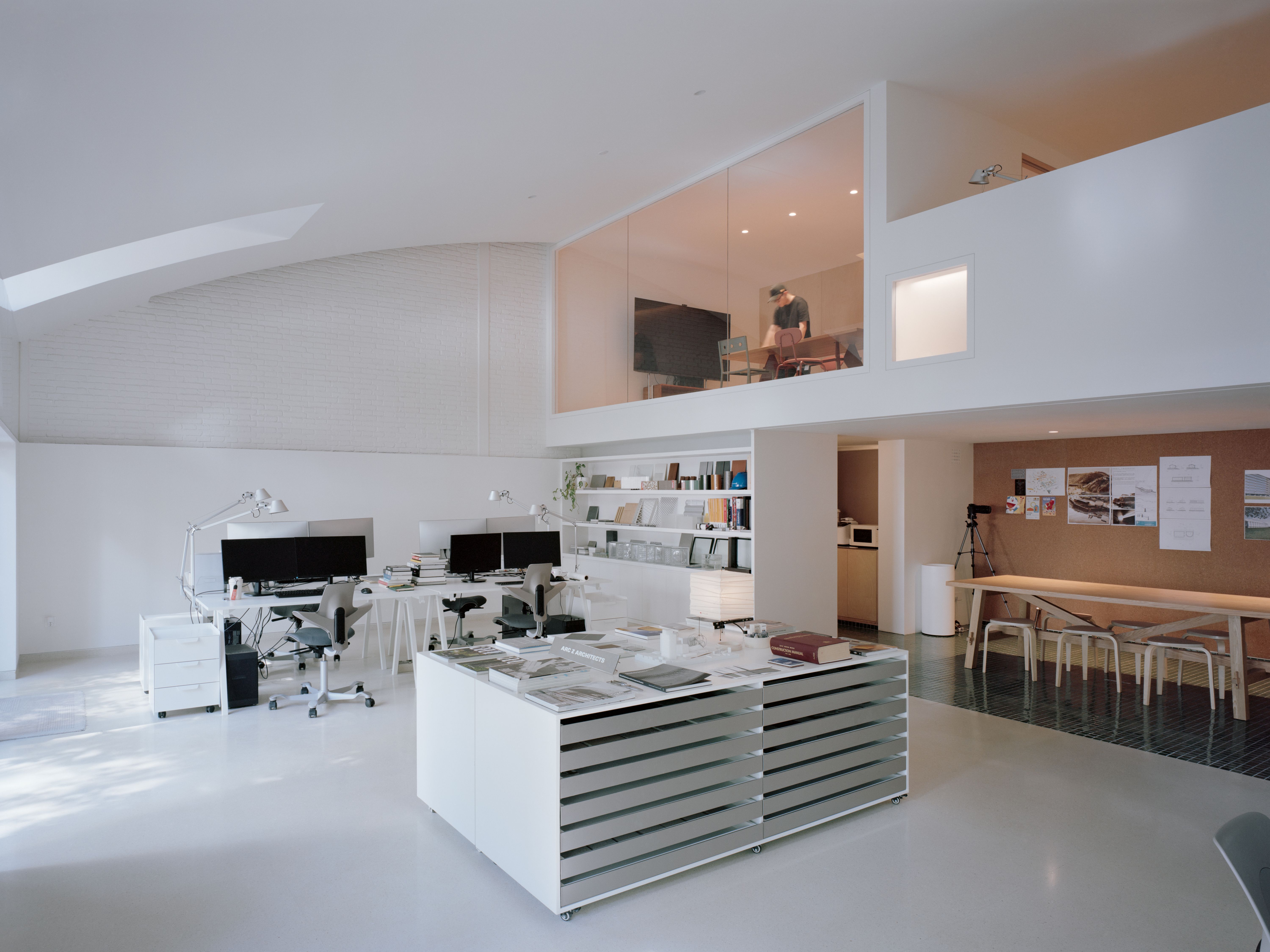
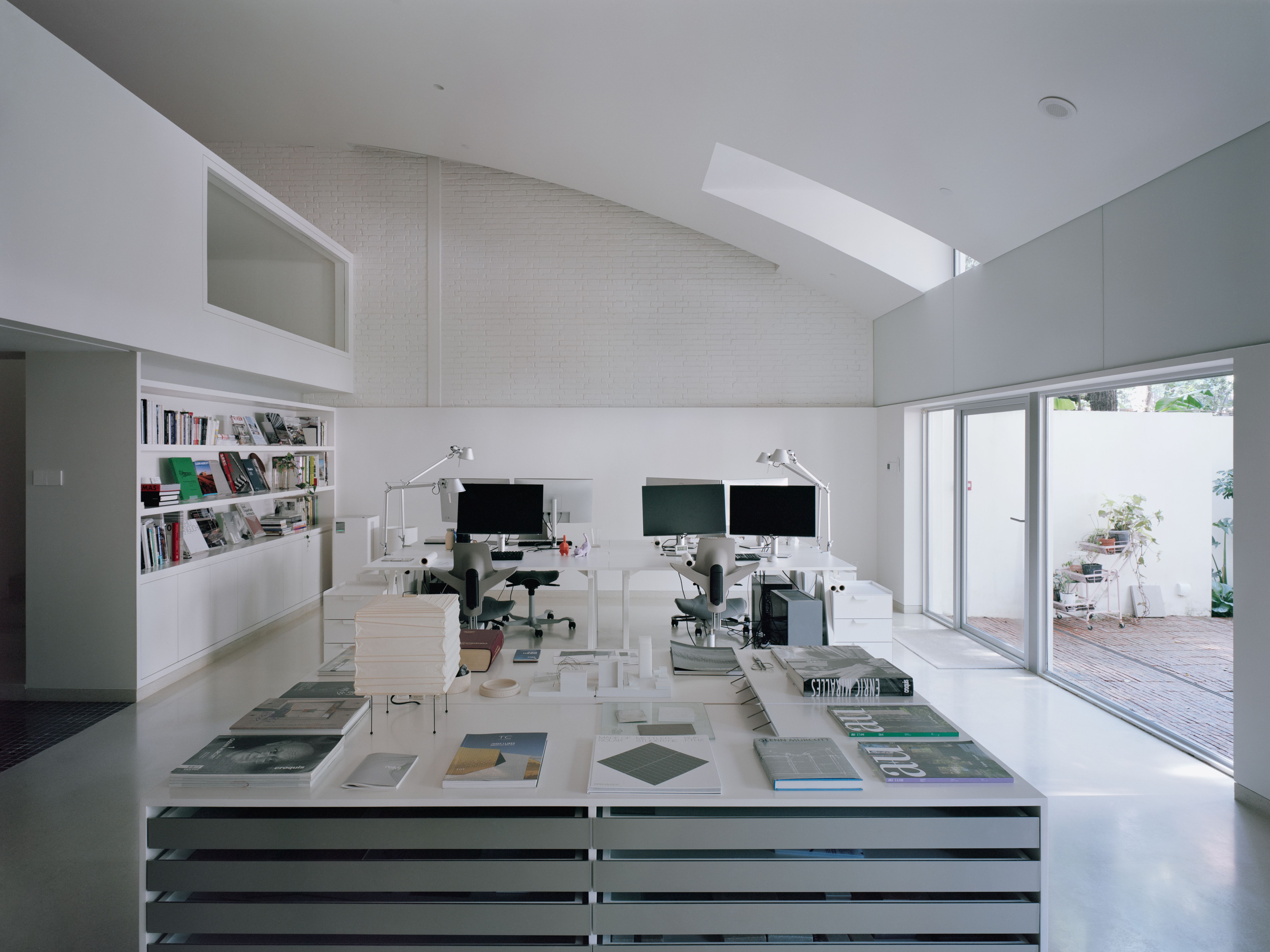
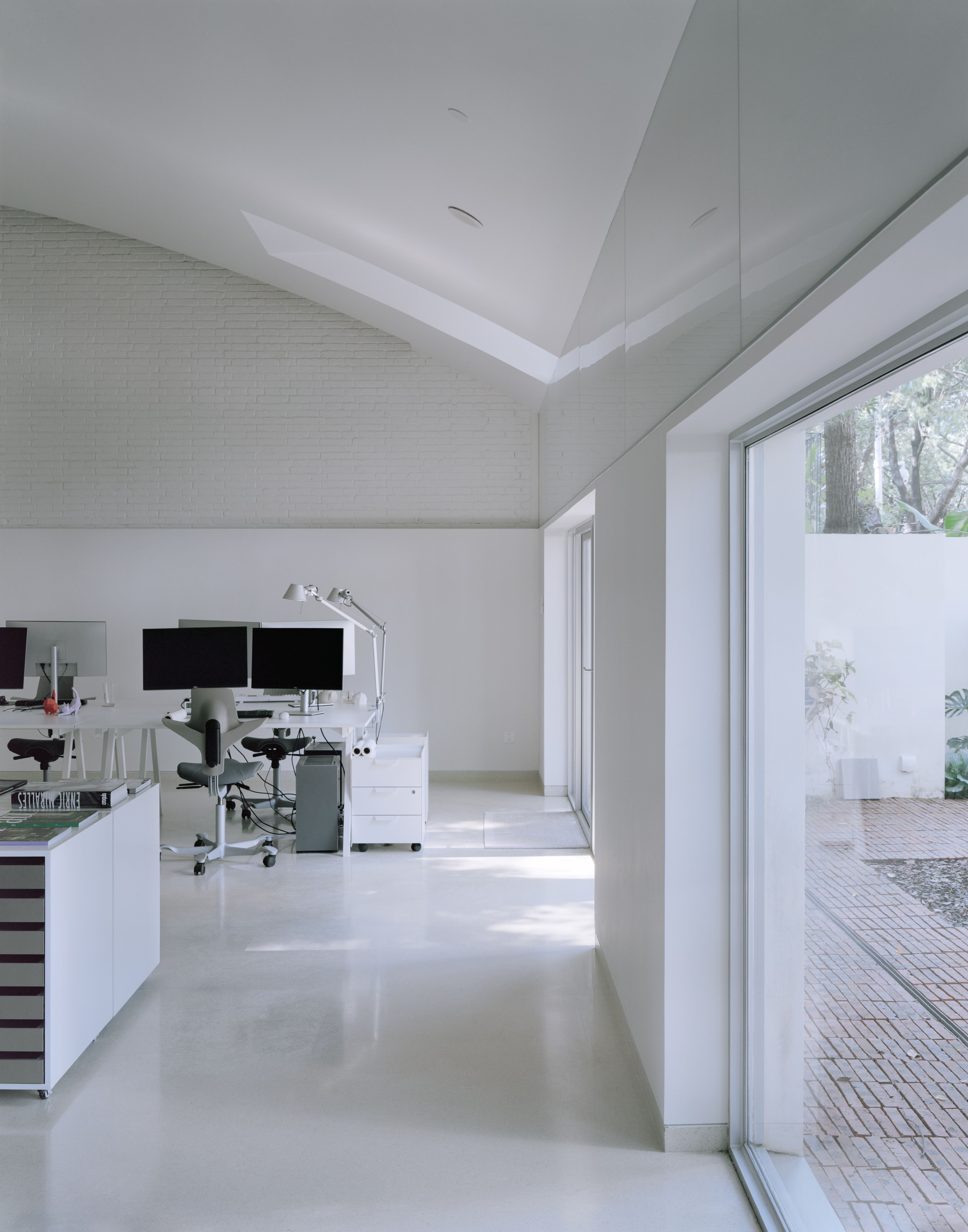
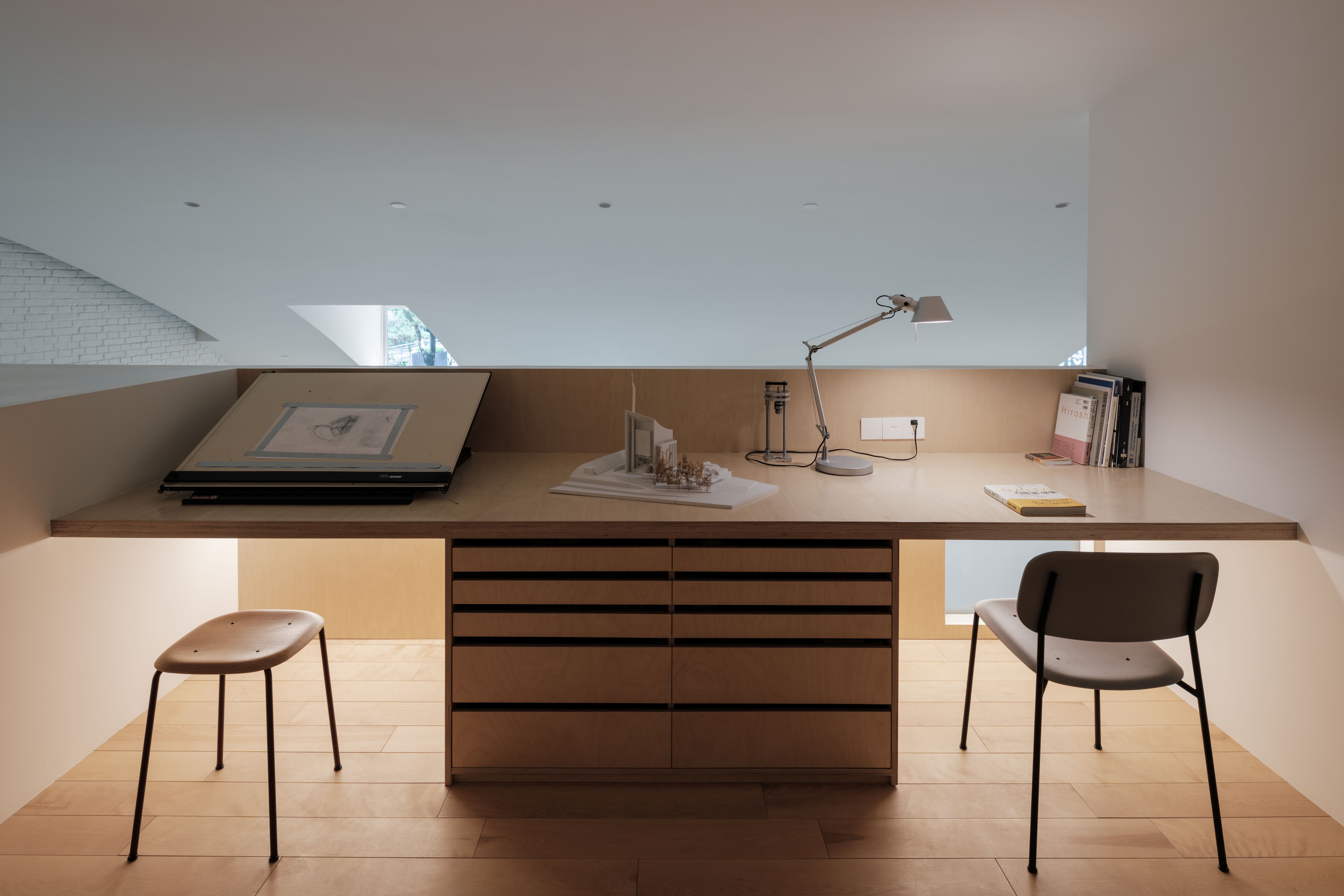
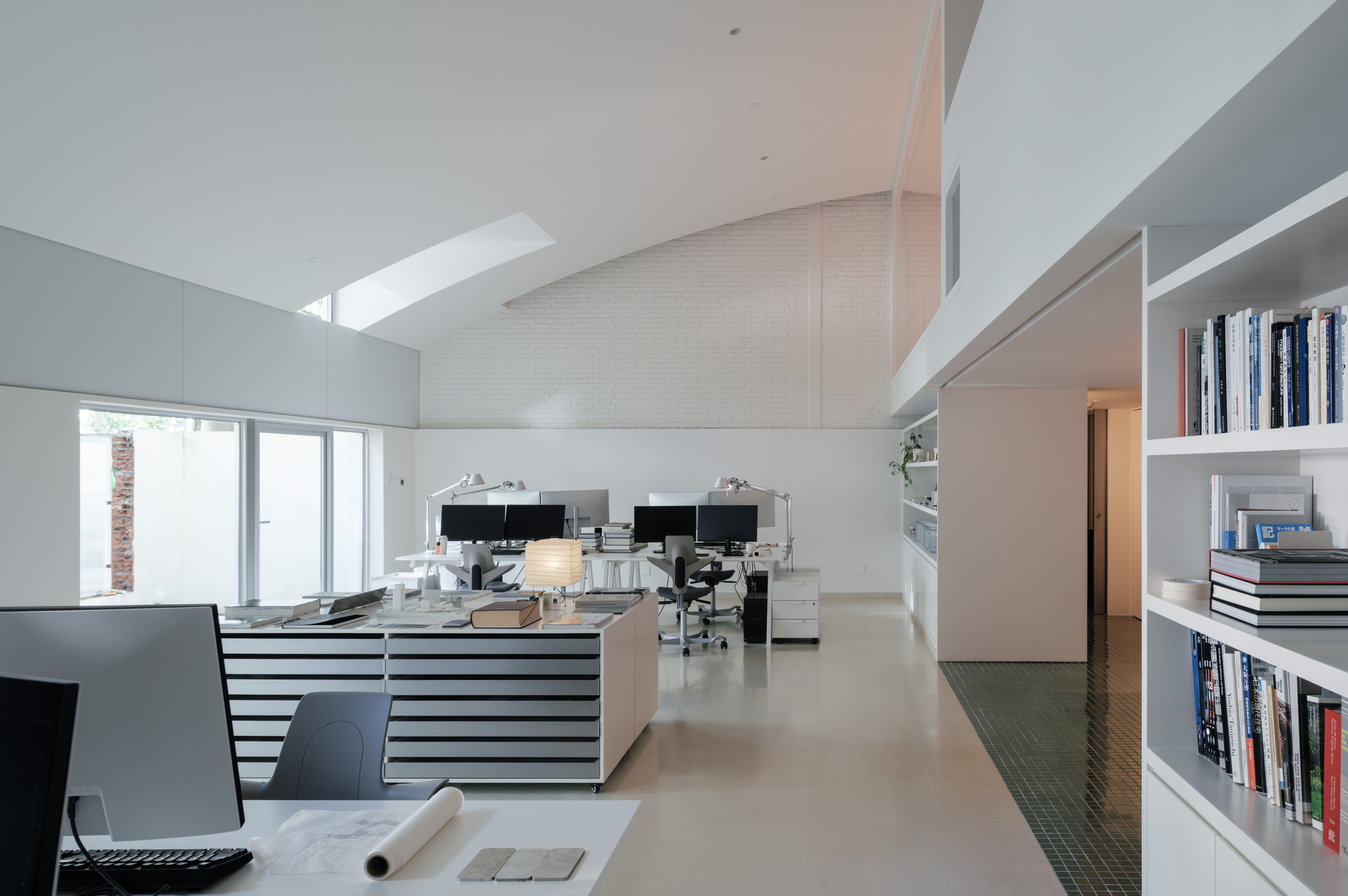
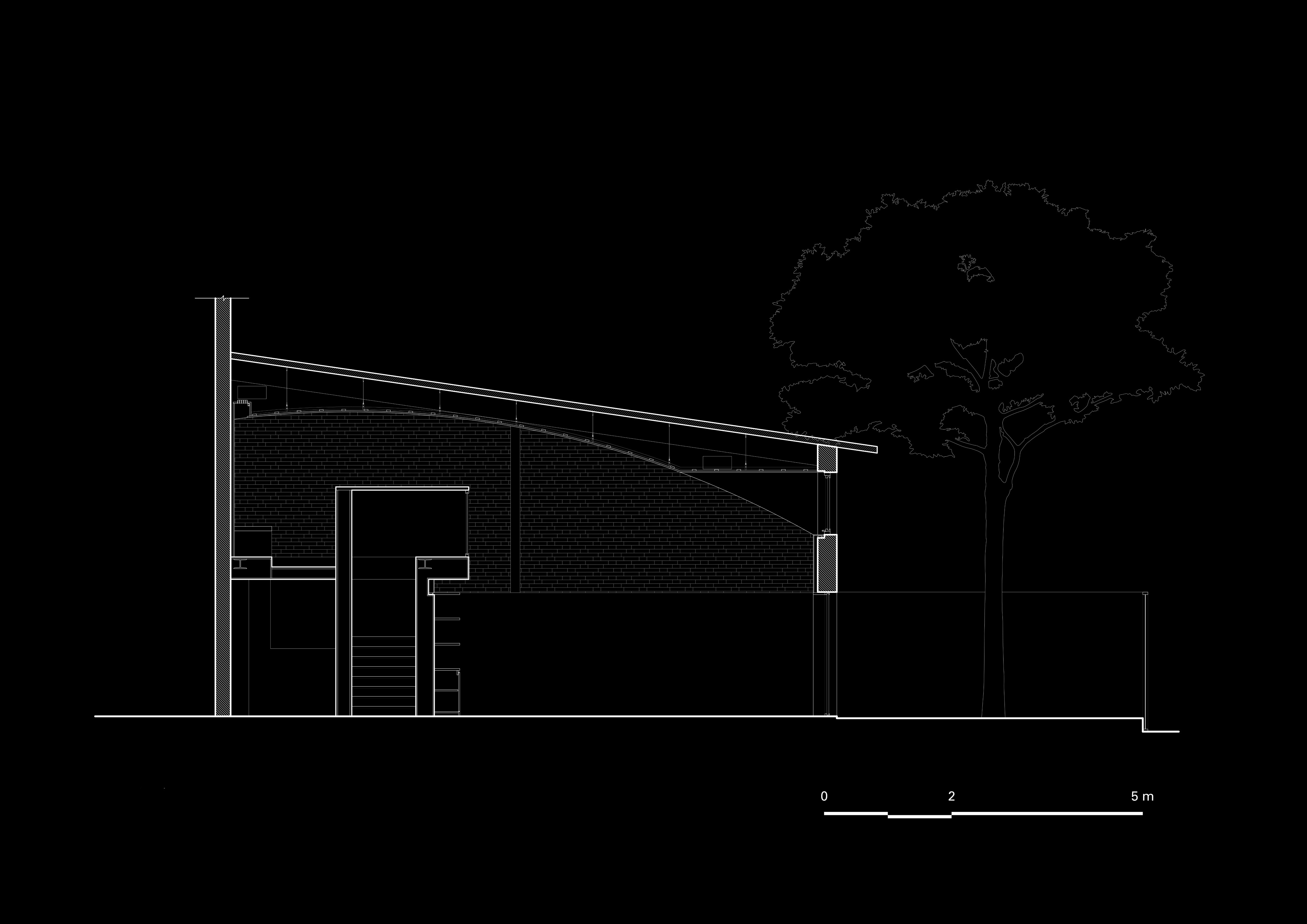
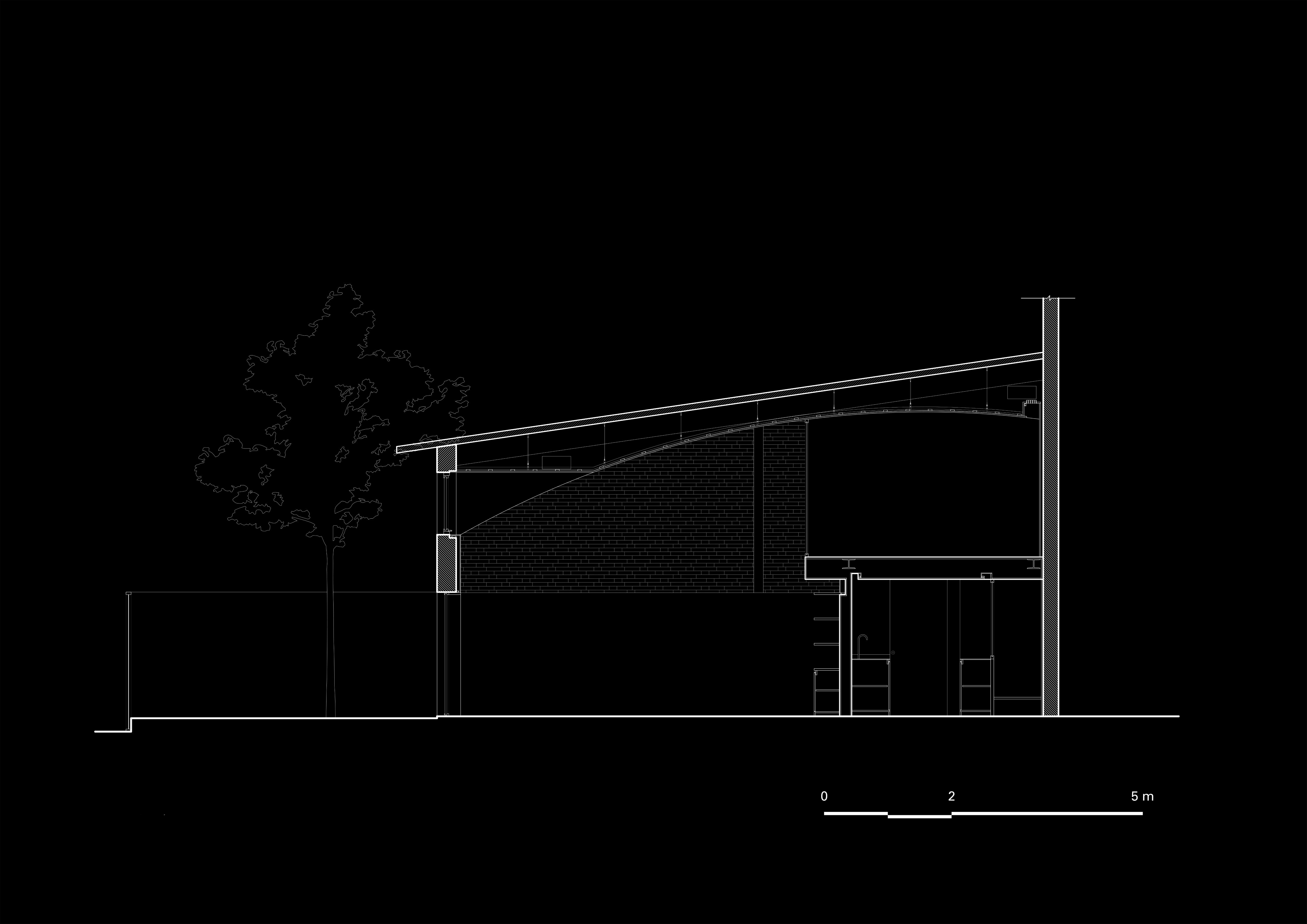
Within the existing mezzanine steelframe, an arced ceiling became a concise yet poetic gesture that resolvedmultiple demands at once: it mediates the transition between the ground floorand mezzanine with a continuous sweep, while its generative circle reaches itsapex along the central axis of the meeting room above, giving the space a calm,symmetrical order and preserving the mezzanine’s maximum clear height whileconcealing the mechanical systems above. Soft daylight filters through the highwindows and washes across the curved surface, turning it into an instrument fordiffusing light; viewing inward from the ground floor, the arc seems to recedebeyond sight. On the other side, a continuous frosted-glass light band gentlyreceives the curved ceiling, making the wall appear perceptively permeable.
Light, cast through two elevatedapertures, assumes the status of volume, sculpting the arc into a pair ofembrasures with both plastic and imaginative depth. The embrasures furtherinform the arrangement of desks through their spatial alignment. From theexterior, however, the embrasures appear as simple square openings on a flat wall.This recalls certain Baroque precedents—such as the church of Santa Maria diPiazza in Turin—where the window registers as flat and geometric on theexterior yet volumetric and luminous within.
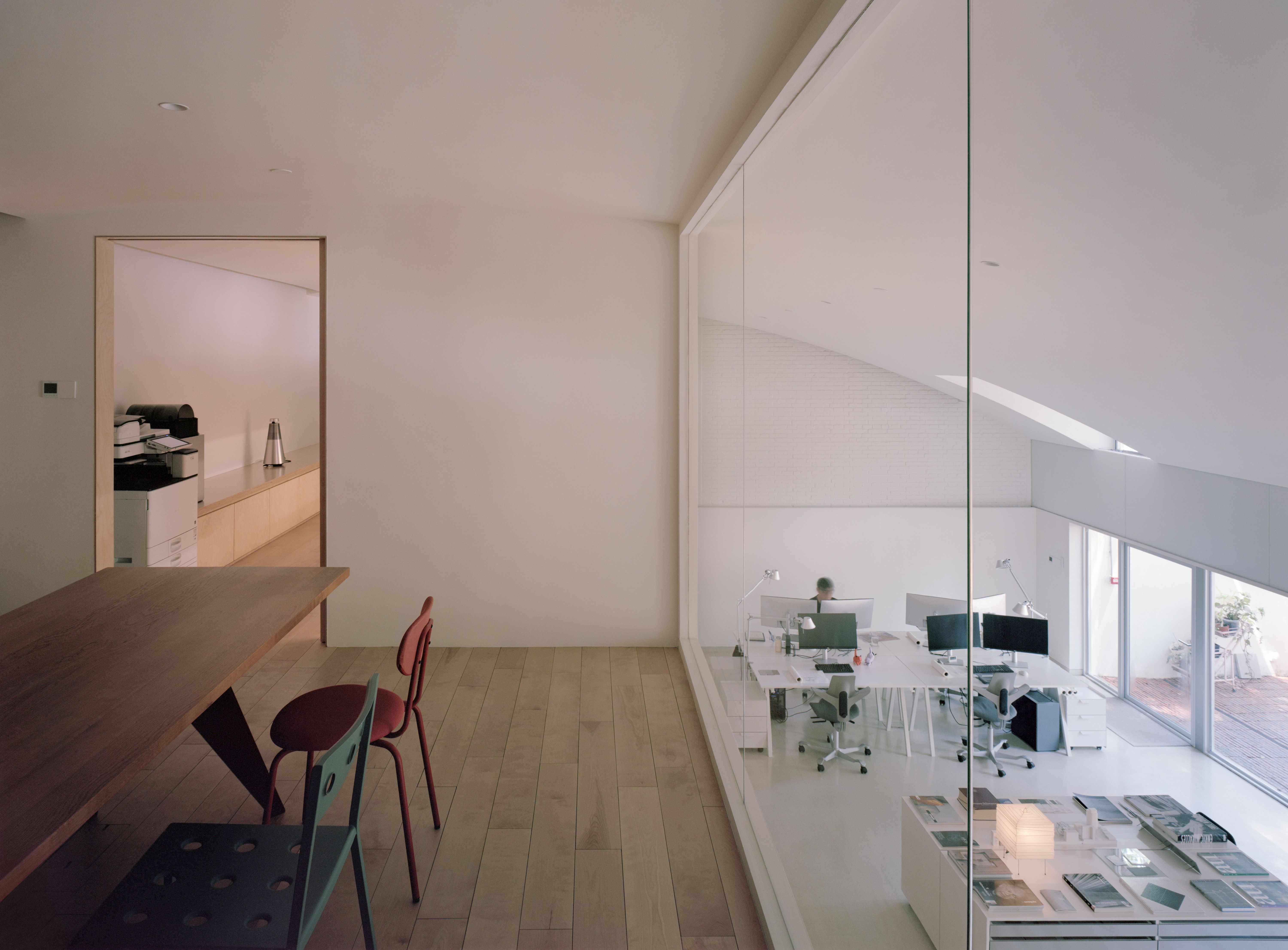
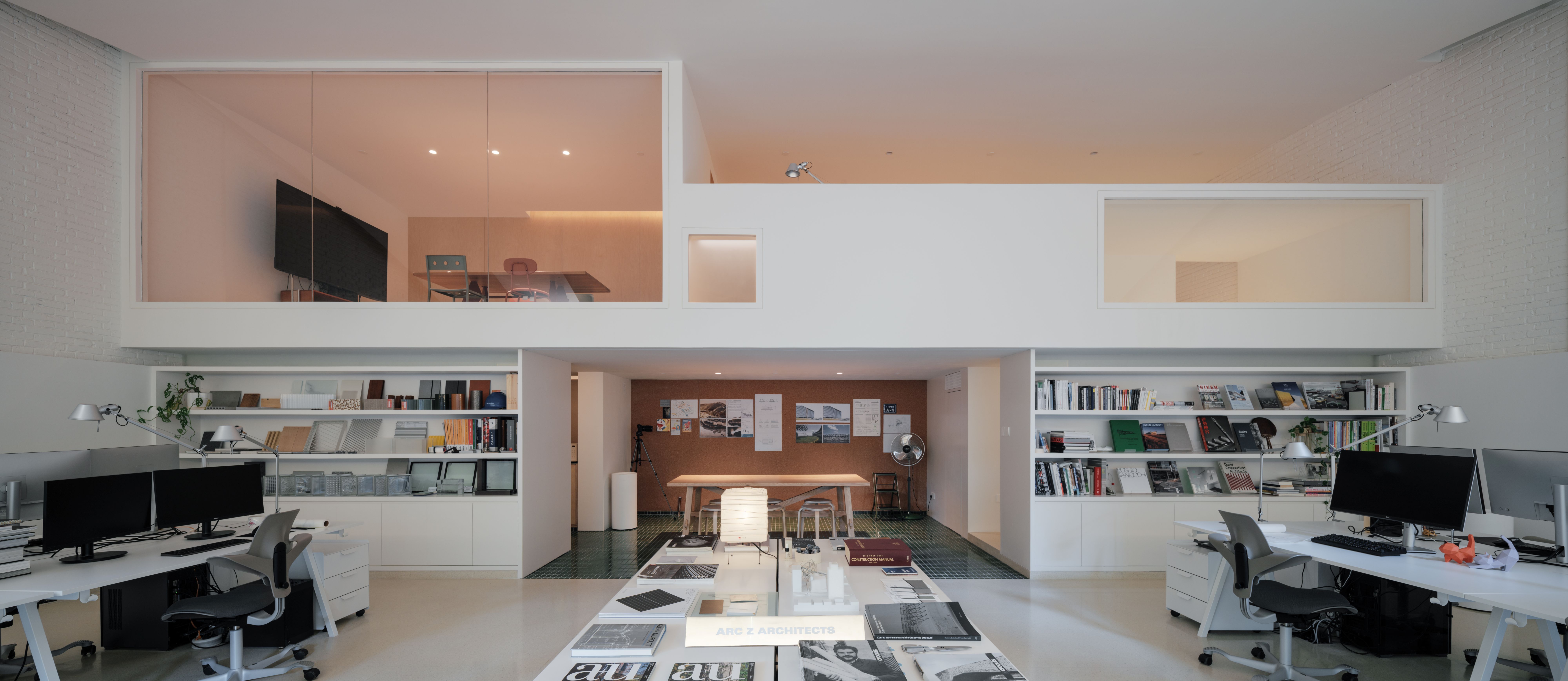
This traversal of light across thethreshold recurs on an interiorized elevation articulated by three windows ofvarying scales. The largest one channels light into the enclosed meeting room,framing and displaying the activities within; the smallest suggests an uncanny,uninhabitable dimension, lit up like a lantern during nighttime. The lastaperture alludes to—and then eludes—the presence of a hidden room, which onlyreveals itself as a concealed staircase once the visitor ascends to the upperlevel. The three windows propose, within one room, varied spatialvitality—whether validated through direct experience or through a vicariousperception.
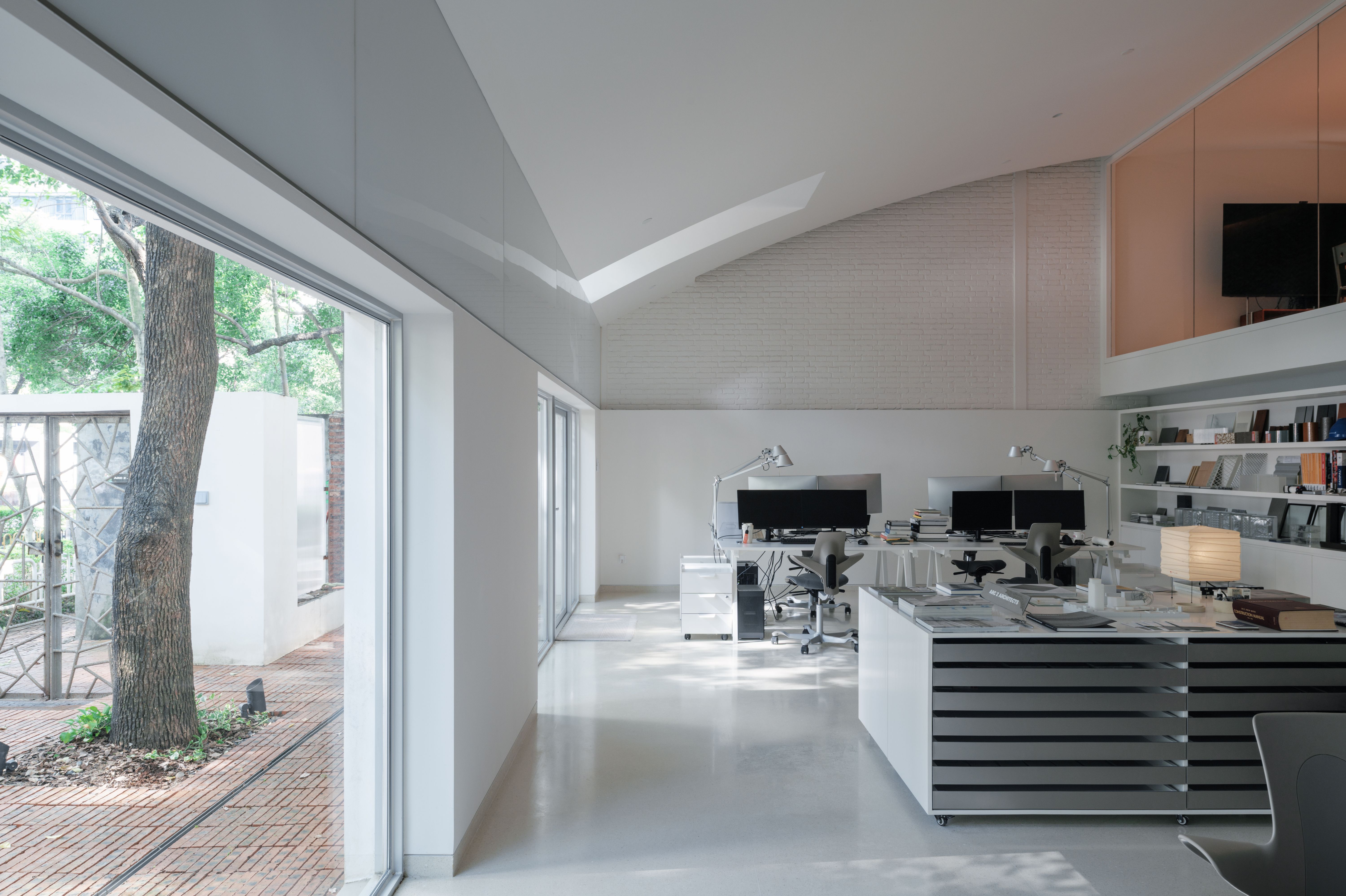
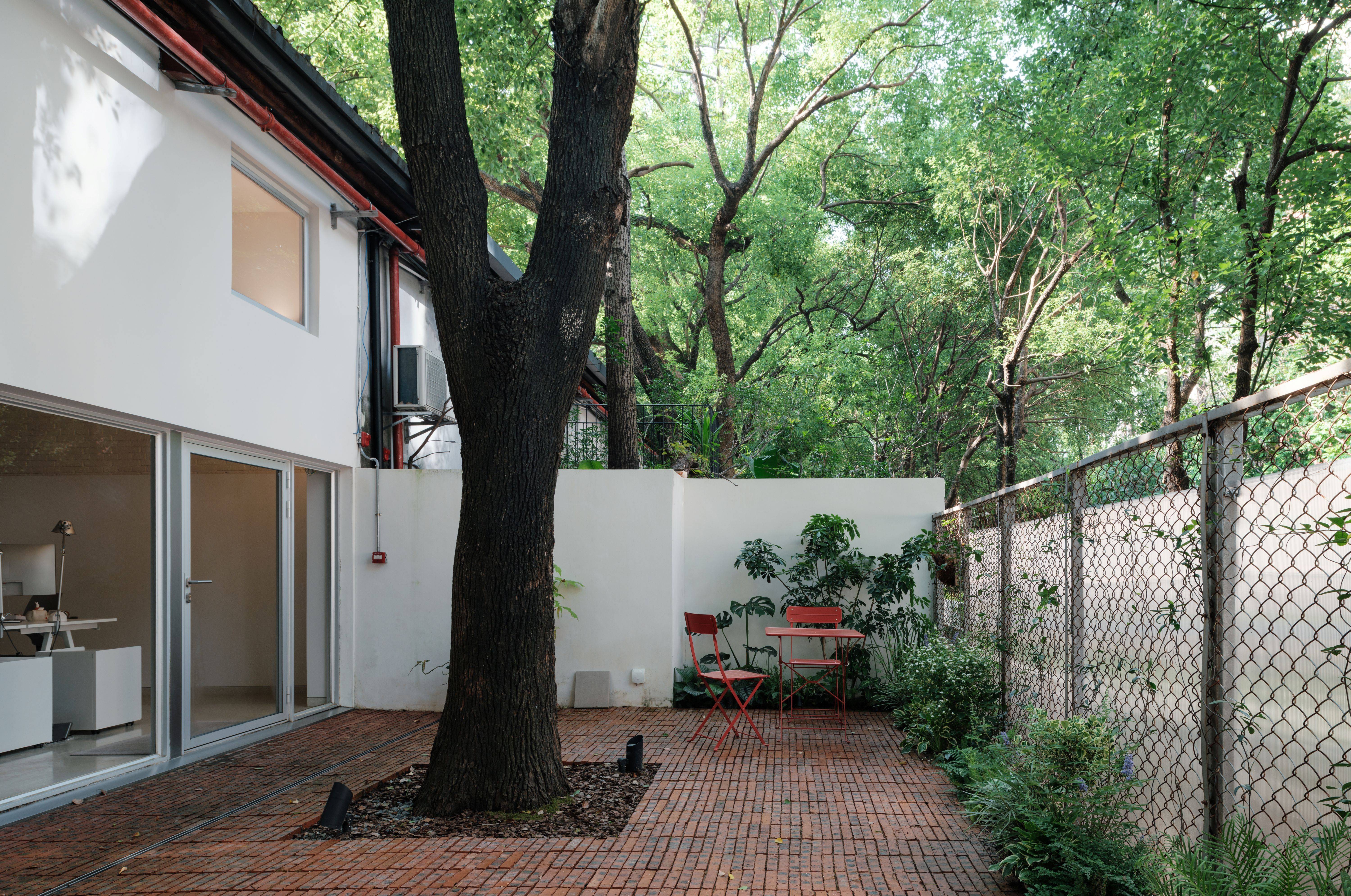
The brick texture registers as a tracethat weaves throughout the site, extending from the wall to the courtyard and resonating with the brickpaved sidewalk. The courtyard itself is slightly elevated and enclosed bylayers of varying permeability: translucent polycarbonate panels along thestreet as a lucid illusion, and above, the canopy of trees filtering light andshadow as an illusionistic lucidity.
工作室的设计源于对一间闲置厂房艺术家工作室的重新想象。当我们初次踏入场地时,室内显得闭塞且昏暗:一个带有夹层的通高空间,自然光仅能从朝东低矮的暗色的门窗透入室内。因此,创造新的开口并引入自然光便成了改造的重点之一。幸运的是,立面上原有的两处设备换气口的构造梁为此提供了结构基础,我们便顺势将其扩展成一对更大的窗洞以引入自然光和通风,并由此出发展开了项目的设计构思。
在不改变既有的夹层钢结构框架前提下,我们用一道弧形天花吊顶同时回应空间的多个需求:它平滑地过渡并连接了上下两层的空间,定义吊顶弧线段的圆形在夹层会议室的中心轴处达到顶点,使会议室的空间呈现出轴对称的稳定构图,并且让吊顶上部空腔得以容纳空调内机的同时使夹层获得最大的净高。透过高窗,弧形吊顶成为散射光的手段,柔和的自然光缓缓滑过整片弧面并充满室内空间。从首层望去,这道弧线的终点被隐藏,仿佛空间仍将继续延伸。在弧顶与界定内外墙体的交汇处,一条连续的磨砂玻璃灯箱轻柔地承接着天花的弧线,以一层朦胧的光晕消解了重量,使这面墙在感官上显得几乎可被穿透。
两侧高窗射入的自然光雕刻出弧顶的体积,高窗开口与弧线的碰撞塑造出一对兼具雕塑感和功能性的窗洞,深嵌的切口也与下方门窗一并通过空间对位和光线关系界定了办公桌的布局。而在室外,两侧高窗则以极简的方形窗洞呈现在白墙之上。有趣的是,类似的内外对比可以引申出某些巴洛克建筑的先例——如都灵的圣玛利亚广场教堂——其外部立面上的窗洞平直规整,却在室内呈现为饱满发光的体量。
弧顶之下,三个不同尺度的玻璃窗户构成了夹层的室内立面。其中最大的窗直接对应着夹层的会议室空间,如舞台般展示着内部活动;最小的磨砂玻璃窗则暗示着一种熟悉的尺寸,却又被置于一个不寻常的位置,在夜间像灯笼一般被点亮。而最后那扇长方形横窗似乎又暗示了一个隐匿房间的存在。只有登上夹层时,它背后所隐蔽的楼梯空间方才显现给访客。三扇大小形态各异的窗户在室内立面上展现出不同尺度和属性的空间,激发意识对于想象维度的间接感知,和身体对真实维度的直接体验的双重乐趣。
砖的肌理作为一种场地内外的印迹,从墙面一直蔓延到庭院,延续着场地外行步道的印记。这方庭院微微抬高,被若干具有不同通透性的界面所围合:临街一侧是轻盈透光的阳光板,展示出一层清澈的浮影;在上方,光线被树冠过滤后撒在室内,形成另一种浮影般的清澈。
Within the existing mezzanine steelframe, an arced ceiling became a concise yet poetic gesture that resolvedmultiple demands at once: it mediates the transition between the ground floorand mezzanine with a continuous sweep, while its generative circle reaches itsapex along the central axis of the meeting room above, giving the space a calm,symmetrical order and preserving the mezzanine’s maximum clear height whileconcealing the mechanical systems above. Soft daylight filters through the highwindows and washes across the curved surface, turning it into an instrument fordiffusing light; viewing inward from the ground floor, the arc seems to recedebeyond sight. On the other side, a continuous frosted-glass light band gentlyreceives the curved ceiling, making the wall appear perceptively permeable.
Light, cast through two elevatedapertures, assumes the status of volume, sculpting the arc into a pair ofembrasures with both plastic and imaginative depth. The embrasures furtherinform the arrangement of desks through their spatial alignment. From theexterior, however, the embrasures appear as simple square openings on a flat wall.This recalls certain Baroque precedents—such as the church of Santa Maria diPiazza in Turin—where the window registers as flat and geometric on theexterior yet volumetric and luminous within.
This traversal of light across thethreshold recurs on an interiorized elevation articulated by three windows ofvarying scales. The largest one channels light into the enclosed meeting room,framing and displaying the activities within; the smallest suggests an uncanny,uninhabitable dimension, lit up like a lantern during nighttime. The lastaperture alludes to—and then eludes—the presence of a hidden room, which onlyreveals itself as a concealed staircase once the visitor ascends to the upperlevel. The three windows propose, within one room, varied spatialvitality—whether validated through direct experience or through a vicariousperception.
The brick texture registers as a tracethat weaves throughout the site, extending from the wall to the courtyard and resonating with the brickpaved sidewalk. The courtyard itself is slightly elevated and enclosed bylayers of varying permeability: translucent polycarbonate panels along thestreet as a lucid illusion, and above, the canopy of trees filtering light andshadow as an illusionistic lucidity.
工作室的设计源于对一间闲置厂房艺术家工作室的重新想象。当我们初次踏入场地时,室内显得闭塞且昏暗:一个带有夹层的通高空间,自然光仅能从朝东低矮的暗色的门窗透入室内。因此,创造新的开口并引入自然光便成了改造的重点之一。幸运的是,立面上原有的两处设备换气口的构造梁为此提供了结构基础,我们便顺势将其扩展成一对更大的窗洞以引入自然光和通风,并由此出发展开了项目的设计构思。
在不改变既有的夹层钢结构框架前提下,我们用一道弧形天花吊顶同时回应空间的多个需求:它平滑地过渡并连接了上下两层的空间,定义吊顶弧线段的圆形在夹层会议室的中心轴处达到顶点,使会议室的空间呈现出轴对称的稳定构图,并且让吊顶上部空腔得以容纳空调内机的同时使夹层获得最大的净高。透过高窗,弧形吊顶成为散射光的手段,柔和的自然光缓缓滑过整片弧面并充满室内空间。从首层望去,这道弧线的终点被隐藏,仿佛空间仍将继续延伸。在弧顶与界定内外墙体的交汇处,一条连续的磨砂玻璃灯箱轻柔地承接着天花的弧线,以一层朦胧的光晕消解了重量,使这面墙在感官上显得几乎可被穿透。
两侧高窗射入的自然光雕刻出弧顶的体积,高窗开口与弧线的碰撞塑造出一对兼具雕塑感和功能性的窗洞,深嵌的切口也与下方门窗一并通过空间对位和光线关系界定了办公桌的布局。而在室外,两侧高窗则以极简的方形窗洞呈现在白墙之上。有趣的是,类似的内外对比可以引申出某些巴洛克建筑的先例——如都灵的圣玛利亚广场教堂——其外部立面上的窗洞平直规整,却在室内呈现为饱满发光的体量。
弧顶之下,三个不同尺度的玻璃窗户构成了夹层的室内立面。其中最大的窗直接对应着夹层的会议室空间,如舞台般展示着内部活动;最小的磨砂玻璃窗则暗示着一种熟悉的尺寸,却又被置于一个不寻常的位置,在夜间像灯笼一般被点亮。而最后那扇长方形横窗似乎又暗示了一个隐匿房间的存在。只有登上夹层时,它背后所隐蔽的楼梯空间方才显现给访客。三扇大小形态各异的窗户在室内立面上展现出不同尺度和属性的空间,激发意识对于想象维度的间接感知,和身体对真实维度的直接体验的双重乐趣。
砖的肌理作为一种场地内外的印迹,从墙面一直蔓延到庭院,延续着场地外行步道的印记。这方庭院微微抬高,被若干具有不同通透性的界面所围合:临街一侧是轻盈透光的阳光板,展示出一层清澈的浮影;在上方,光线被树冠过滤后撒在室内,形成另一种浮影般的清澈。
Location: OCT Loft, Shenzhen, Guangdong, China
地理位置:中国广东省深圳市南山区华侨城创意文化园
Status: Built
项目状态:建成
Duration: 2024 -2025
项目周期:2024 -2025
Team: Zi Meng, Yangyang Liu, Yinuo Qiu, Siyao Huang, Guanming Huang, Yinxuan Jiao, Hongxi Yu
团队:孟子、刘杨洋、邱一诺、黄思遥、黄冠铭、焦尹宣、于洪熙
Courtyard Collaborator: O/I Object Imaginary
庭院合作:O/I Object Imaginary
地理位置:中国广东省深圳市南山区华侨城创意文化园
Status: Built
项目状态:建成
Duration: 2024 -2025
项目周期:2024 -2025
Team: Zi Meng, Yangyang Liu, Yinuo Qiu, Siyao Huang, Guanming Huang, Yinxuan Jiao, Hongxi Yu
团队:孟子、刘杨洋、邱一诺、黄思遥、黄冠铭、焦尹宣、于洪熙
Courtyard Collaborator: O/I Object Imaginary
庭院合作:O/I Object Imaginary